
Table of Contents
ToggleReformer vs Mat Pilates: Which Is Better?
Pilates has evolved a lot over the past decade. Once known mostly as mat exercises on the floor, it’s now dominated by the reformer, a machine that’s become almost synonymous with Pilates. When people compare Reformer vs Mat Pilates, the real question isn’t which is “better” overall — it’s which suits your body, goals, and lifestyle.
Studios now offer everything from intense group workouts to small, technique-focused classes — and even bespoke one-on-one sessions.
So, in the Reformer vs Mat Pilates debate, which is right for you? Let’s break it down.
Three Quick Takeaways:
-
- Same roots: Reformer and mat Pilates were both created by Joe Pilates and are part of his full exercise system.
- Full-body benefits: Both styles are excellent for improving full-body strength and mobility, though the reformer method often offers a slightly more intense workout.
- Choosing the right style: It comes down to preference, accessibility, and budget.
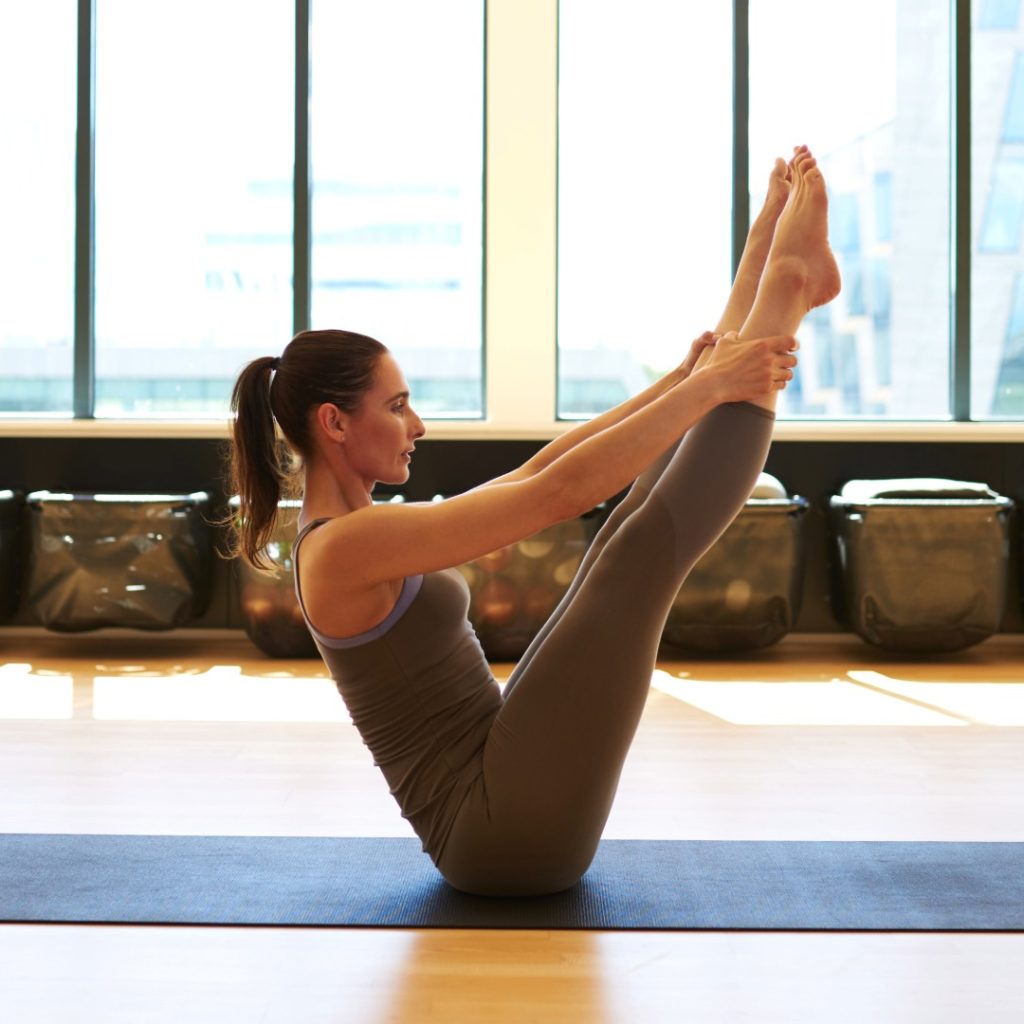
What is Mat Pilates?
Mat Pilates is a low-intensity strength and mobility workout that targets the whole body. Famous for challenging your core, it also works many other muscle groups and can be adapted from gentle to advanced levels.
Created by Joseph Pilates, mat work is part of his larger exercise system, originally called Contrology, designed to improve health and rehabilitation. Guided by the principles of breath, concentration, centre, control, precision, and flow, it remains a versatile and effective practice today.
Accessible and affordable, mat work requires minimal equipment and space — you can practise in a studio, leisure centre, or even at home. Some classes may include small props to enhance your workout, but the focus is always on technique, control, and movement.

What is Reformer Pilates?
Reformer Pilates is a branch of Pilates that uses a specialised machine called the reformer.
The reformer features a sliding platform, called a carriage, set within a metal frame. Springs provide resistance or assistance, and straps and pulleys allow for a wide range of exercises. Joseph Pilates originally designed the reformer, and although many modern versions exist, the core design remains true to his original concept.
One of the key benefits of the reformer is its adaptability. It can make mat-based exercises more challenging by adding resistance or instability, which engages the core and stabilising muscles. At the same time, it can support those who need it — for example, exercises like the feet-in-straps series help support the legs while still strengthening the core.
This flexibility makes reformer suitable for a wide range of people, from those seeking high-intensity workouts to those recovering from injury. If you’re new to reformer, starting with 1:1 sessions with a qualified instructor is recommended to learn proper technique and get the most from future group classes.
Reformer vs Mat Pilates: Which Is the Right Fit for You?
Both mat and reformer provide excellent benefits, though many people find they have a clear preference once they’ve tried both.
Mat Pilates may be right for you if you:
-
- Want to master fundamental techniques without the influence of equipment
- Enjoy learning exercises you can practise anytime, anywhere
- Prefer the sense of stability and connection that floor-based work provides
- Are working within a limited budget
- Don’t have access to a reformer
- Have experience with the reformer and want to explore a broader range of exercises
Reformer Pilates may be right for you if you:
- Experience back pain and find certain mat exercises — such as single or double tabletop leg lifts — challenging
- Have difficulty getting up and down from the floor and benefit from exercising on an elevated surface
- Have been practising mat exercises for some time and feel you’ve plateaued or want to refresh your routine
- Want a fun, dynamic workout that allows for increased resistance, greater challenge, and varied movement patterns that test stability and coordination
Conclusion
There’s no single winner in the Reformer vs Mat Pilates comparison — both offer distinct benefits that almost everyone can enjoy. The best choice for you will depend on your budget, access, and personal preference.
If you’re completely new to exercise, whichever option you choose, we recommend starting with one-to-one sessions with a qualified instructor. This helps you become familiar with the exercises and any equipment involved, while building a strong understanding of correct technique and movement — so you get the most from your practice.
Many excellent mat and reformer instructors can be found on Amberfied, a platform that connects you with verified trainers to suit a range of budgets. At NOAHBOA, all our own trainers are listed there too, so you can browse profiles, compare experience, and book a session that matches what you’re looking for.

NOAHBOA Reformer Club in Gibraltar offers flexible memberships and packages, designed to suit your lifestyle and goals.